
Sidewalks, Walkways & Flatwork
Connect your outdoor spaces with safe, attractive concrete walkways and sidewalks that guide foot traffic and enhance curb appeal.
Why Sidewalks and Walkways Matter
Sidewalks and walkways serve practical purposes beyond just getting from one place to another. They direct foot traffic away from landscaping and prevent worn paths through your grass. Properly placed walkways keep mud and debris from being tracked into your home. They provide safe passage during rain, snow, and ice when grass becomes slippery. Good walkways make your property more accessible and usable year-round.
Safety is a primary concern. Uneven ground, exposed roots, and muddy paths create trip hazards. Dark areas without clear walking paths lead to stumbles and falls. Concrete walkways eliminate these dangers with level, stable surfaces that remain safe in all weather. Proper lighting along walkways adds security and prevents accidents after dark.
Well-designed walkways improve property appearance and value. They define outdoor spaces and create intentional flow between areas. A walkway leading from your driveway to your front door makes a welcoming first impression. Paths through gardens invite exploration and showcase your landscaping. Side walkways provide convenient access to backyards and outbuildings. These functional features become design elements that enhance your overall property.
Concrete delivers the best value for sidewalks and walkways in New Albany. Our climate with freeze-thaw cycles, rain, and temperature extremes demands durable materials. Concrete withstands this weather without cracking, settling, or deteriorating like other materials. Properly installed concrete walkways last forty years or more with minimal maintenance. That longevity makes concrete the smart choice for permanent walking surfaces.
Planning Sidewalks and Walkways That Work
Good walkway design considers how people naturally move through your property. You want paths where people already walk rather than forcing them onto routes that feel indirect. Watch where family members, guests, and delivery drivers actually travel. Those worn paths show you where walkways should go.
Width and Layout
Walkway width depends on location and use. Front walkways from the driveway to your door should be at least four feet wide. This allows two people to walk side by side comfortably. Side and back walkways can be three feet wide since they see less traffic. Service walks to utility areas can be narrower at two to three feet.
Straight paths work fine for short distances but long straight walks look boring. Add gentle curves that feel natural and create visual interest. Curves should have purpose like wrapping around a tree or following property contours. Avoid excessive curves that force people to cut across corners. The path should feel like the logical route even if it is not perfectly straight.
Slope and Drainage
Walkways need slope for drainage but not so much that they become difficult to walk. A two percent grade works well. This equals one-quarter inch drop per foot of length. The slope should run across the width to move water off the sides. Long walkways on slopes may need steps or ramps at intervals.
Accessibility matters if you have family members with mobility issues or plan to age in place. Ramps work better than steps for wheelchairs, walkers, and wheeled carts. Ramp slopes should not exceed one inch of rise per foot of length. Handrails add safety on sloped sections. Planning for accessibility now prevents the need for modifications later.
Finish Options
Surface finish affects both safety and appearance. Broom finish provides good traction without being rough on bare feet. This standard finish works well for most residential walkways. Smooth trowel finish looks sleek but can be slippery when wet. Reserve smooth finishes for covered areas or purely decorative sections.
Decorative options transform basic walkways into design features. Exposed aggregate reveals colorful stones for natural beauty. Stamped concrete creates patterns mimicking stone, brick, or tile. Colored concrete or acid stains add visual interest. Borders in contrasting colors or finishes define edges. These upgrades cost more but significantly enhance appearance.
Integration With Landscape
Walkways should complement your overall landscape design. Consider how they connect with driveways, patios, and entryways. Matching or coordinating finishes create visual continuity. Contrasting materials define transitions between spaces. Edges can be straight and formal or curved and organic depending on your style.
Landscaping alongside walkways enhances their appearance. Low plants or groundcover soften hard edges. Taller plants create borders without obstructing views. Lighting installed during construction illuminates paths safely. Plan for these elements during design so installation proceeds efficiently. Key planning considerations include:
- Primary routes between key destinations
- Width needed for comfortable passage and intended use
- Slope requirements for drainage and accessibility
- Surface finish for safety and appearance
- Connection points with existing concrete and landscaping
- Future access needs for maintenance and utilities
Our experience installing walkways throughout New Albany helps us design paths that work with your property. We suggest layouts you might not have considered and help avoid common mistakes. Whether you need a simple front walk or an elaborate system of connected pathways, we create practical, attractive solutions.
Professional Sidewalk and Walkway Installation
Installing sidewalks and walkways requires the same attention to detail as larger concrete projects. Proper base preparation, correct thickness, and quality finishing ensure long-lasting performance. We follow proven methods that create walkways you can depend on.
Site Preparation
We start by marking the walkway location with spray paint or stakes. This lets you visualize the path before we break ground. Any adjustments happen now when changes are easy. Once approved, we remove grass, plants, and topsoil along the route. Excavation depth accounts for base material and concrete thickness.
The excavated area gets graded to proper slope. We compact the soil thoroughly to prevent future settling. Tree roots near the walkway get trimmed back to prevent future damage. Utility lines get located and marked. This preparation work takes time but prevents problems that cause walkways to crack or settle.
Base and Forms
A compacted gravel base provides stable support. We install four inches of crushed stone and compact it thoroughly. The base extends slightly beyond the walkway edges for support. Proper compaction here prevents settling that creates uneven surfaces and cracks.
Forms define walkway edges and contain concrete during pouring. We build forms to correct width and elevation following the designed slope. Curves require flexible forming material bent to smooth arcs. Straight sections need rigid lumber staked securely. Forms must withstand concrete pressure without moving. Clean forms create professional edges on the finished walkway.
Concrete Placement and Finishing
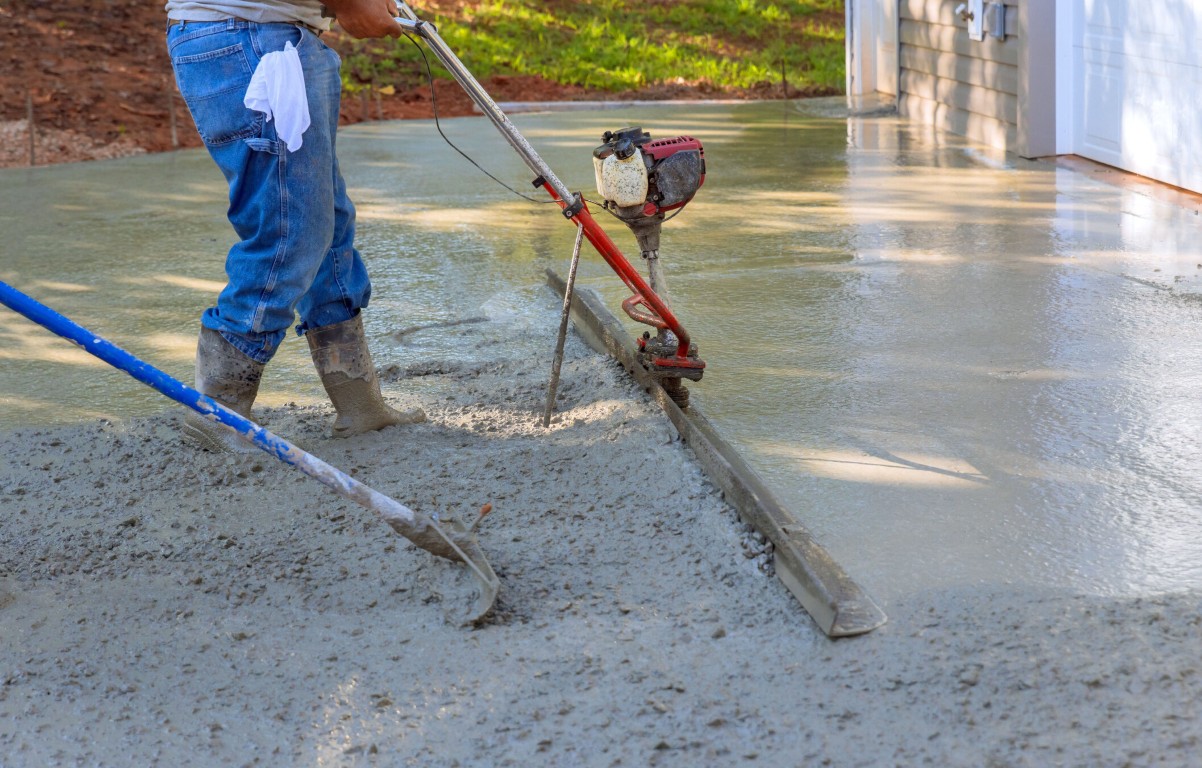
Sidewalk concrete is typically four inches thick. This provides adequate strength for foot traffic and occasional vehicle crossings. We place concrete and work it to fill forms completely. Proper consolidation eliminates air pockets and creates density. Screeding levels the surface to proper elevation and slope.
Finishing creates your chosen surface texture. We float the surface smooth first. Then we apply broom finish, stamps, or other textures as specified. Control joints cut every four to five feet manage cracking. These joints create weak points where cracks form in straight lines rather than random patterns. Edges get rounded to prevent chipping. Proper timing on all finishing operations ensures quality results.
Curing and Cleanup
Curing allows concrete to gain strength properly. We apply curing compound or coverings that retain moisture. You can walk on sidewalks after forty-eight hours but should avoid heavy loads for seven days. Full strength develops over four weeks.
We remove forms after concrete sets and clean up the work area. Disturbed landscaping gets repaired. Excess dirt and materials get hauled away. Your new walkway is ready to use with minimal disruption to your property. If you need other concrete work like a driveway or patio, we coordinate projects to complete everything efficiently.