Concrete Slab & Foundation Work
Build on solid ground with properly engineered concrete slabs and foundations that support your structure for generations.
Why Foundation and Slab Work Matters
Your foundation is the most critical part of any building. It supports the entire weight of the structure and distributes that load evenly to the ground below. A properly built foundation prevents settling, cracking, and structural damage that can cost tens of thousands to repair. When you invest in quality foundation work from the start, you protect everything built on top of it.
Concrete slabs serve multiple purposes. They create level floors for buildings, garages, sheds, and workshops. Slabs provide a stable base for heavy equipment and machinery. They prevent moisture from coming up through the ground into your building. A well-constructed slab lasts the lifetime of the structure without needing replacement or major repairs.
New Albany sits in an area with varied soil conditions and seasonal weather changes. Our local experience means we understand how these factors affect foundation performance. We design and build foundations that account for soil type, drainage patterns, frost depth, and local building codes. This knowledge prevents problems before they start.
Foundation work requires specialized knowledge, proper equipment, and attention to detail. Mistakes at this stage create expensive problems later. Our team brings years of experience to every foundation and slab project. We do not cut corners because we know the long-term consequences. A qualified concrete slab contractor understands that every shortcut in foundation work becomes a structural problem years down the road. When you need foundation work done right the first time, trust contractors who understand what it takes.
Foundation and Slab Services We Provide
Different projects require different foundation approaches. We handle all types of concrete foundation and slab work for residential, commercial, and industrial applications. Our experience covers everything from small shed slabs to large building foundations.
Slab-on-Grade Foundations
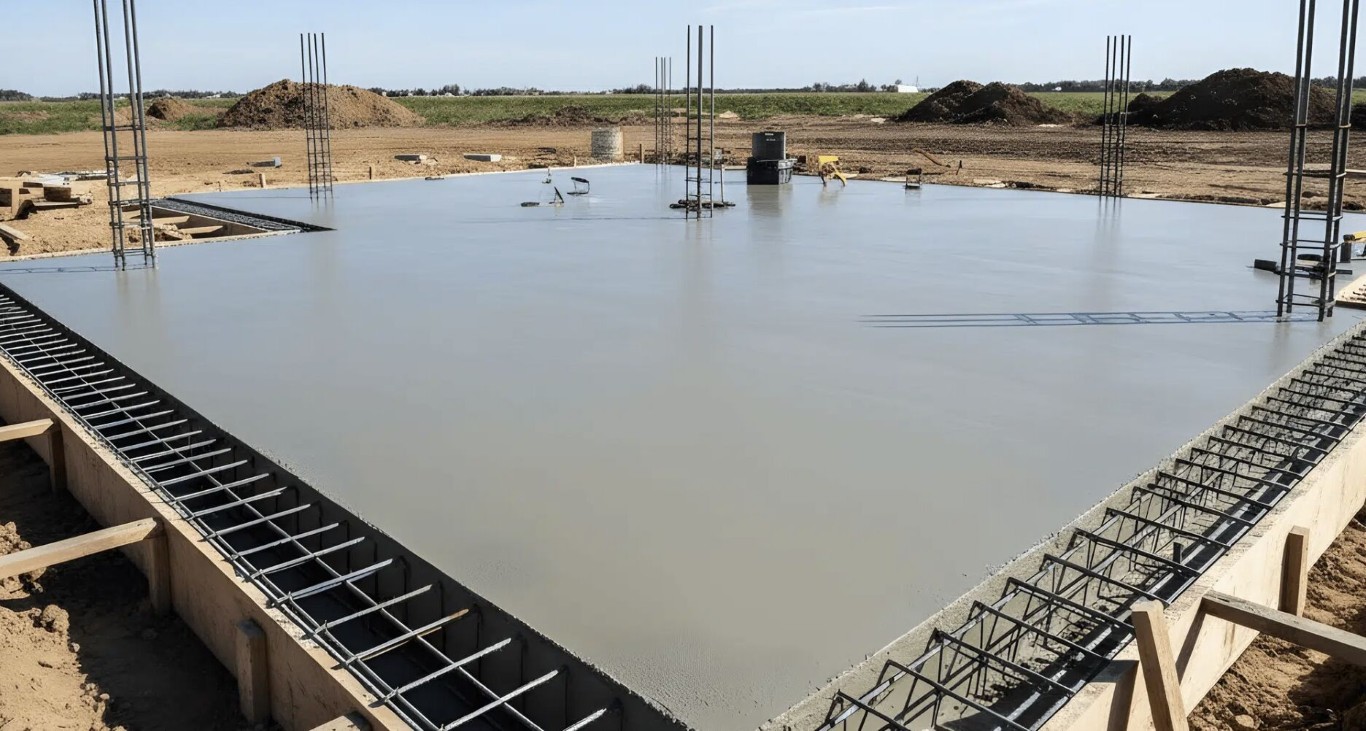
Slab-on-grade foundations combine the foundation and floor into one continuous piece of concrete poured directly on prepared soil. This economical approach works well for homes, garages, and commercial buildings in our area. The slab sits on a compacted gravel base with proper moisture barriers underneath. We thicken the edges where walls will rest to provide extra support. Rebar reinforcement throughout the slab adds strength and controls cracking.
This foundation type offers several advantages. Installation takes less time than other foundation methods. The solid concrete floor needs no additional subfloor or structural support. Radiant heating tubes can be embedded in the slab for efficient heating. Most importantly, slab-on-grade foundations eliminate the crawl space where moisture and pests often cause problems.
Basement and Crawl Space Foundations
When your project needs below-ground space, we build traditional basement or crawl space foundations. These consist of concrete footings below the frost line supporting concrete or block walls. The floor slab comes after the walls are complete and backfilled. Proper waterproofing on the exterior walls prevents moisture intrusion. Interior drainage systems channel any water away from the foundation.
Basements add valuable living or storage space to your home. Crawl spaces provide access to plumbing and utilities. Both require careful attention to drainage and moisture control. We install drain tile around the perimeter, apply waterproof coatings, and ensure proper grading. These steps protect your investment and keep your foundation dry.
Garage and Outbuilding Slabs
Garages, shops, and storage buildings need solid concrete floors that handle vehicle weight and equipment loads. We pour slabs with adequate thickness for your intended use. Standard garage slabs are four inches thick, but we increase that for heavy vehicles or equipment. The slab includes proper slope for drainage toward the door opening. Control joints prevent random cracking by creating weak points where cracks form in straight lines.
Outbuilding slabs require the same careful preparation as larger projects. We excavate to proper depth, install a compacted gravel base, and add vapor barriers. The concrete mix design accounts for local freeze-thaw cycles. Finishing options range from basic trowel finish to broom texture for better traction. You can also choose our decorative concrete finishes or epoxy coatings for upgraded appearance and protection.
Commercial and Industrial Applications
Commercial projects often require specialized foundation work. We install foundations for retail buildings, warehouses, office complexes, and industrial facilities. These projects involve engineering specifications, permit requirements, and strict timeline demands. Our team coordinates with architects, engineers, and general contractors to keep projects on schedule.
Industrial slabs must support heavy machinery, forklift traffic, and point loads from equipment legs. We design these slabs with proper thickness, reinforcement, and joint spacing for the expected loads. Special finishes like hard trowel or power trowel create smooth, dense surfaces that withstand industrial use. When you need commercial concrete work done professionally and on time, we deliver results.
What Makes Quality Foundation Work
Several factors separate quality foundation work from substandard installations. Site preparation must achieve proper soil compaction and drainage. Formwork needs accurate placement and secure bracing. Reinforcement requires correct size, spacing, and positioning. Concrete mix design should match project requirements and local conditions. Finishing techniques must create the specified surface while maintaining structural integrity.
We focus on each of these elements because they all matter. Shortcuts in site prep lead to settling. Weak forms create uneven surfaces. Improper reinforcement placement reduces strength. Wrong concrete mix causes premature deterioration. Our crews know the right way to handle every step. Here is what we do differently:
- Test soil conditions and compact to proper density
- Install adequate gravel base and moisture barriers
- Use engineered rebar layouts with proper spacing and support
- Pour concrete at correct thickness throughout the entire slab
- Finish surfaces to specified grade and slope
- Apply proper curing methods for maximum strength development
Quality foundation work costs slightly more upfront but saves enormously over time. Repairs to failed foundations cost many times more than doing it right initially. When you work with experienced professionals, you get foundations and slabs that perform flawlessly for decades.
Our Foundation Installation Process
Foundation work follows a systematic process that cannot be rushed or simplified. Each step builds on the previous one. Missing or rushing any step compromises the final result. Here is how we approach every foundation and slab project.
Site Evaluation and Planning
We start with thorough site evaluation. Our team examines soil conditions, drainage patterns, and property elevation. We locate underground utilities to avoid conflicts. Property boundaries get verified to ensure compliance with setback requirements. If plans or engineering specifications exist, we review them carefully. This planning phase identifies potential challenges before equipment arrives on site.
For residential projects, we discuss your needs and timeline. You learn what to expect during construction and how long each phase takes. We explain how weather can affect scheduling and what backup plans we have. Clear communication prevents surprises and keeps everyone aligned on expectations.
Excavation and Base Preparation
Excavation removes soil to the depth specified for your project. We excavate below the frost line for permanent structures to prevent frost heave damage. All organic material, roots, and debris get removed because these materials compress and cause settling. The excavated area is graded to proper elevation with attention to drainage slope.
Gravel base installation comes next. We use clean, angular gravel that compacts well and provides drainage. The gravel goes down in lifts and gets compacted with professional equipment. Proper compaction prevents future settling that causes foundation cracks. Moisture barriers go on top of the gravel to stop ground moisture from wicking up into the concrete. These barriers are critical for preventing moisture problems inside your building.
Forms and Reinforcement
Form boards define the edges and control concrete thickness. We set forms to exact elevations using laser levels and survey equipment. Forms must be straight, secure, and properly braced to withstand concrete pressure during the pour. For foundations with thickened edges or stem walls, we build stepped forms that create the required profile.
Rebar reinforcement gets placed according to engineering specifications or code requirements. The rebar sits on chairs that hold it at the correct height within the slab thickness. Proper positioning matters because rebar too close to the surface or bottom does not work effectively. We tie all intersections and ensure the grid remains stable during concrete placement. Any required plumbing or electrical sleeves get installed before we pour.
Concrete Pour and Finishing
Pour day requires careful coordination. The concrete arrives mixed to specifications that account for intended use and weather conditions. We place concrete systematically to avoid cold joints where two batches meet. Vibrators eliminate air pockets and ensure concrete flows around reinforcement. Screeds level the surface to proper elevation.
Finishing creates the final surface texture and grade. For foundations that will be covered, a basic screed finish suffices. Exposed slabs receive trowel or broom finishes depending on intended use. We install control joints at proper spacing to manage crack locations. Edge work creates clean, durable edges that resist chipping. The finished surface meets your specifications for flatness and slope.
Curing begins immediately after finishing. We apply curing compounds or coverings that retain moisture while concrete gains strength. Proper curing takes at least seven days for light use and longer for full strength. We provide guidance on when you can remove forms, allow foot traffic, or build on the foundation. Your concrete contractor in New Albany stays available to answer questions throughout the curing period.