
Concrete Patios
Create the perfect outdoor living space with a custom concrete patio that requires almost no maintenance and lasts for decades.
Why Concrete Makes the Best Patio Material
Your patio should be a place where you relax and enjoy time with family and friends. You do not want to spend every weekend maintaining it. Concrete patios deliver the perfect combination of durability, low maintenance, and design flexibility. Once installed, your concrete patio serves you for decades without the constant upkeep that other materials demand.
Wood decks look nice initially but require endless maintenance. You have to seal or stain them every year. Boards rot and need replacement. Splinters hurt bare feet. Termites and carpenter ants see wood as food. The maintenance costs add up to thousands of dollars over the deck's lifetime. Concrete eliminates all these problems. It will not rot, warp, or attract pests. You never need to seal, stain, or replace boards.
Pavers create another set of headaches. Individual pieces shift and settle over time. Weeds grow between the joints and require constant removal. Sand washes out and needs replacement. Pavers around trees or on slopes gradually spread apart creating gaps. Releveling a paver patio takes time and money. Concrete stays level and solid. The continuous surface prevents weeds and eliminates joints where problems develop.
Concrete patios handle extreme weather without damage. Summer heat will not make it buckle or fade. Winter freeze-thaw cycles do not crack properly installed concrete. Heavy rain runs off instead of creating puddles. You can place furniture, grills, and planters anywhere without worrying about weight distribution. The stable surface supports whatever outdoor living setup you want. In New Albany, where we experience all four seasons, concrete proves itself year after year. Any established concrete patio contractor will confirm that a properly built base and slope matter more to long-term performance than any surface finish.
Custom Patio Designs That Match Your Vision
Modern concrete patios go far beyond plain gray squares. You have countless design options that create unique outdoor spaces reflecting your style. The key is understanding what options exist and how they affect both appearance and budget.
Shape and Size Flexibility
Concrete adapts to any shape you can imagine. Rectangular patios work well for most homes and maximize usable space. Curved edges soften the look and blend naturally with landscaping. Irregular shapes follow your yard contours or wrap around features like trees and gardens. Multiple levels create defined areas for dining, lounging, and cooking. We can integrate steps, planters, and raised borders directly into the patio design.
Size depends on how you plan to use the space. A small patio for a bistro table needs about one hundred square feet. A full outdoor living area with dining table, seating, and grill requires three hundred square feet or more. Consider furniture placement and traffic flow when planning size. Leave room to move chairs and walk around comfortably. Bigger is not always better if it overwhelms your yard, but too small feels cramped.
Color and Finish Options
Standard gray concrete works fine if you prefer classic simplicity. Adding color opens up design possibilities. Integral color mixes throughout the concrete for consistent, permanent hues. Popular choices include earth tones like tan, brown, and terra cotta that complement outdoor settings. You can also choose blues, greens, or reds for bolder statements.
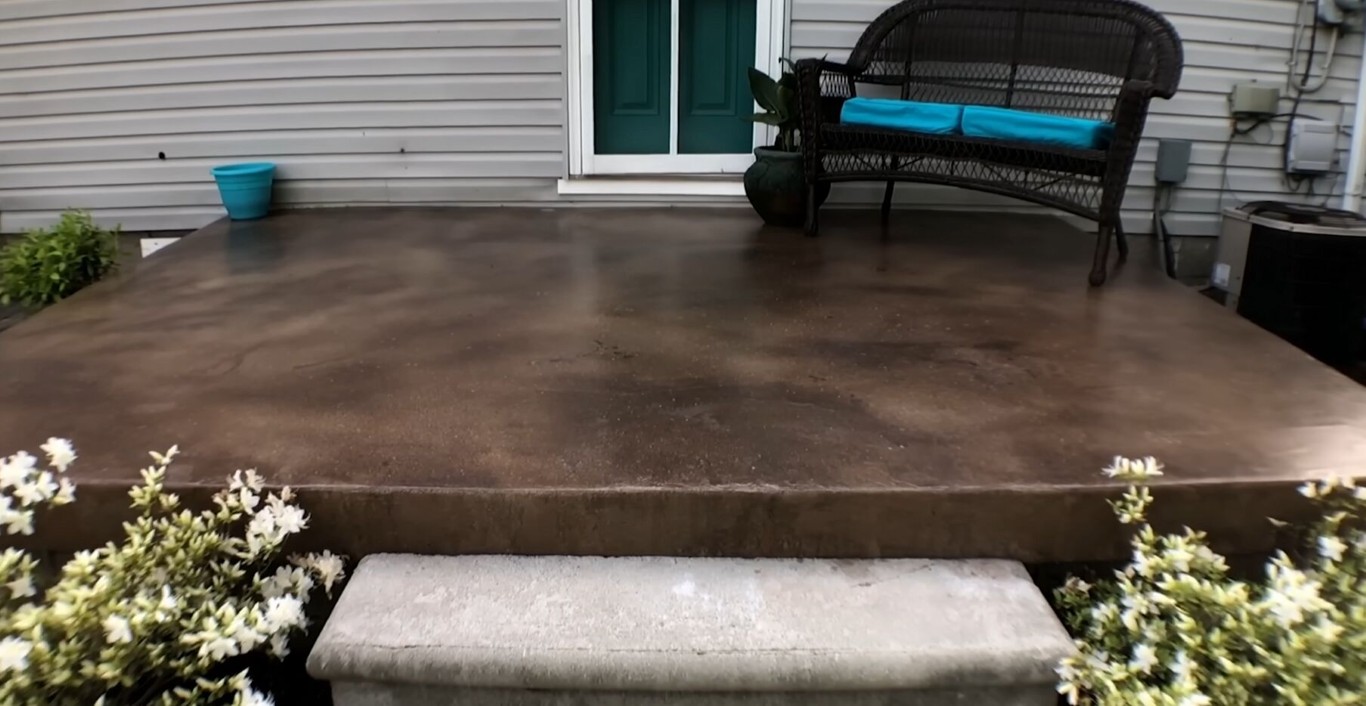
Staining adds color after the concrete cures. Acid stains create variegated, natural-looking tones by chemically reacting with the concrete. Each application produces unique patterns. Water-based stains offer more uniform color with broader shade options. Staining works on new or existing patios, giving you flexibility in timing. Combining multiple colors creates custom looks you cannot achieve with single-color concrete.
Surface finishes affect both appearance and function. Broom finish provides good traction without being rough on bare feet. Smooth trowel finish creates a sleek modern look. Exposed aggregate reveals colorful stones in the mix for natural beauty and excellent traction. Our stamped decorative concrete mimics stone, brick, or tile at a fraction of the cost.
Decorative Elements
Add visual interest with borders, bands, and accents. Contrasting colors define edges or create geometric patterns. Stamped borders frame the patio like picture frames. Scored lines divide the surface into sections suggesting tile or stone. Embedded objects like stones, glass, or shells create personalized designs.
Lighting integration transforms your patio for evening use. We can install sleeves for post lights during construction. Fiber optic lights embedded in the concrete create starlight effects. Low-voltage landscape lighting highlights edges and features. Planning for lighting during the design phase ensures clean installation without cutting into finished concrete later.
Integration With Your Landscape
Your patio should connect seamlessly with the rest of your outdoor space. Consider how it relates to doors, walkways, and garden areas. Matching or coordinating with existing concrete creates visual continuity. Contrasting colors or patterns can define the patio as a distinct zone. Steps or slopes transition between different yard elevations naturally.
Think about furniture placement, sun exposure, and views when positioning your patio. Morning sun is pleasant. Afternoon western sun can be intense. Trees provide shade but drop leaves and debris. Views of gardens or privacy from neighbors matter. Drainage must direct water away from your home. These practical factors influence design as much as aesthetics. Key planning considerations include:
- Access from house doors and adjacent spaces
- Sun and shade patterns throughout the day
- Privacy from neighboring properties
- Wind exposure and natural windbreaks
- Drainage direction and slope
- Utility line locations for safety
We help you think through these details during planning. Our experience building patios throughout New Albany means we understand local conditions and common challenges. We suggest solutions you might not have considered and help you avoid mistakes that reduce enjoyment of your outdoor space.
Professional Patio Installation Process
Building a patio that lasts requires more than pouring concrete on the ground. Proper installation involves multiple steps that work together to create a stable, level, attractive surface. Shortcuts at any stage lead to problems later.
Site Preparation
We start by marking the patio location and verifying it matches your vision. Any existing grass, plants, or old concrete gets removed. The area is excavated to depth accounting for base material and concrete thickness. Excavation depth depends on your soil type and drainage requirements. We dig deeper in clay soil than in sandy soil.
The excavated area gets graded to establish proper slope. Patios need to slope away from your house at least one-quarter inch per foot. This gradient moves water away without being noticeable underfoot. We use laser levels to ensure accurate slope across the entire area. Low spots get filled and high spots cut down to create consistent grade.
Base and Forms
A compacted gravel base provides stability and drainage. We install four to six inches of crushed stone depending on soil conditions. The stone goes down in layers with thorough compaction between layers. Proper compaction prevents settling that causes cracks. The gravel also keeps water from accumulating under the patio where freeze-thaw damage occurs.
Forms define the patio edges and contain concrete during pouring. We build forms to exact dimensions using straight lumber or flexible material for curves. Forms must be level across their width but follow the slope along their length. Secure staking prevents forms from moving when concrete pressure builds during the pour. Clean, straight forms create professional-looking finished edges.
Concrete and Finishing
Concrete arrives mixed to specifications for your project and local weather conditions. We place and spread the concrete quickly to prevent premature hardening. The concrete gets screeded level, then worked to eliminate air pockets. Proper consolidation ensures density and strength throughout the slab.
Finishing creates your chosen surface texture. We float the surface smooth first. Color hardeners get applied if specified. Then we add the final finish whether broom texture, stamped patterns, or exposed aggregate. Control joints cut into the surface manage where cracks form. Edge work creates rounded corners that resist chipping. Each step requires proper timing because concrete hardens continuously.
Curing and Maintenance
Curing allows concrete to gain full strength. We apply curing compound or coverings that retain moisture during the critical first week. You can walk on the patio after forty-eight hours but should wait seven days before placing heavy furniture or grills. Full strength develops over twenty-eight days.
Long-term maintenance is minimal. Sweep regularly to prevent dirt buildup. Wash with a garden hose or pressure washer as needed. Reseal every two to three years to protect color and resist stains. Concrete sealers are easy to apply and extend the life of your patio. Compared to wood deck maintenance or paver releveling, concrete requires almost no effort.
Your New Albany concrete contractor provides complete care instructions. We stand behind our installation work and use quality materials that perform. When you invest in a concrete patio, you create an outdoor living space that serves your family for generations with minimal upkeep.