Retaining Walls & Concrete Masonry
Control erosion, create usable yard space, and add structural beauty with professionally built retaining walls that last generations.
Why You Need Retaining Walls
Sloped yards present challenges. Erosion washes away soil during rainstorms. Steep grades make mowing difficult and dangerous. Uneven terrain limits how you can use your property. Retaining walls solve these problems by holding back soil and creating level areas. They turn unusable slopes into functional outdoor spaces.
Beyond function, retaining walls add visual appeal. A well-designed wall creates focal points and defines different yard zones. Terraced walls on steep slopes create garden areas at multiple levels. Walls along property lines establish clear boundaries. The structure and permanence of masonry adds value to your property. Buyers appreciate the combination of beauty and function that quality retaining walls provide.
New Albany properties often have varied topography with slopes and grade changes. Heavy rains common to our area accelerate erosion on unprotected slopes. Retaining walls prevent soil loss and protect foundations, driveways, and landscaping below. The right wall system channels water properly and prevents costly damage to your property.
Properly engineered retaining walls last fifty years or more. They require minimal maintenance compared to other solutions like landscaping timbers that rot or terracing that erodes. The initial investment in quality wall construction pays off through decades of reliable performance and increased property value.
Retaining Wall Types and Materials
Different retaining wall systems work better for different situations. Wall height, soil conditions, drainage requirements, and aesthetic preferences all influence which type serves you best. We install various wall systems and help you choose what fits your needs and budget.
Poured Concrete Retaining Walls
Poured concrete creates the strongest retaining walls. We build forms and place reinforced concrete to create solid, monolithic structures. These walls handle high loads and tall heights that other systems cannot match. Poured walls work well for basement walls, commercial applications, and anywhere maximum strength is needed.
Concrete walls can be left with a smooth finish, textured for visual interest, or faced with stone or brick for decorative appearance. The solid construction resists lateral pressure from soil and water. Proper reinforcement with rebar and adequate thickness ensure long-term stability. Drainage systems behind the wall prevent water buildup that creates excessive pressure.
Concrete Block Retaining Walls
Concrete masonry units create a versatile block retaining wall suitable for many applications. Standard blocks get reinforced with rebar and filled with concrete for strength. The modular construction allows walls to follow curves and angles. Block walls cost less than poured concrete while still providing excellent durability.
Face finishes range from standard split-face block to specialty shapes and colors. Some blocks interlock without mortar for faster installation. Others get laid with mortar like traditional masonry. The construction method depends on wall height and local soil conditions. Block walls work well for residential applications up to six feet tall.
Segmental Retaining Wall Systems
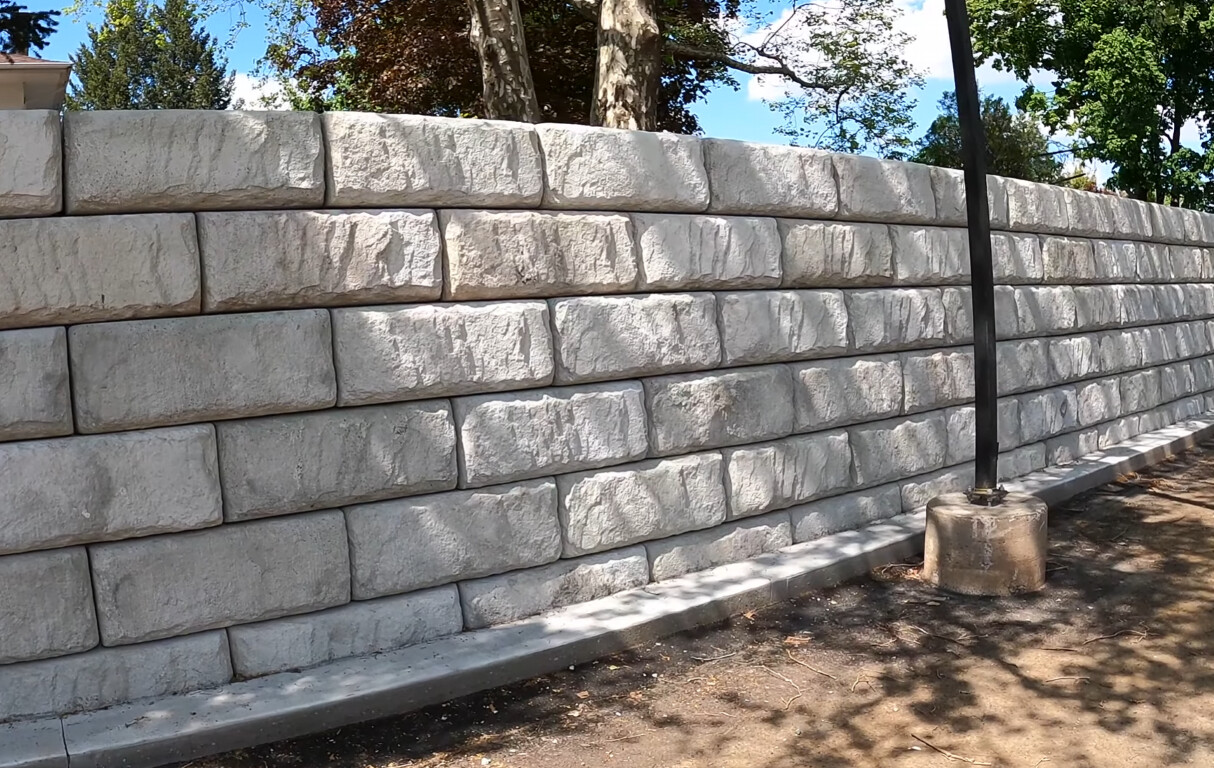
Segmental walls use interlocking concrete units designed specifically for retaining soil. These systems feature textured faces that look like natural stone. The units stack without mortar using pins or built-in interlocking features. Installation proceeds faster than traditional masonry. The segmental design allows some flexibility to accommodate ground movement.
Multiple styles, colors, and textures let you customize appearance. Straight or curved walls adapt to your property contours. Corners and caps create finished looks. Most segmental systems work for walls up to four feet tall without engineering. Taller walls need geogrid reinforcement and professional design. These systems balance appearance, cost, and performance for typical residential applications.
Natural Stone and Veneer
Natural stone creates beautiful retaining walls with rustic character. We select and fit stones to create stable structures. Dry-stacked walls use no mortar for a traditional appearance. Mortared stone walls provide additional strength and weather resistance. Stone walls work well for gardens, landscaping features, and decorative applications.
Stone veneer combines the beauty of natural stone with the strength of concrete. We build a concrete or block structural wall then apply stone facing. This approach delivers both performance and appearance. Veneer costs less than solid stone while creating the same visual effect. The concrete backing provides reliable long-term stability.
Choosing the Right System
Wall selection depends on several factors. Consider these when planning your retaining wall project:
- Wall height and length requirements
- Soil type and stability behind the wall
- Drainage conditions and water management needs
- Load above the wall such as driveways or buildings
- Desired appearance and architectural style
- Budget for materials and installation
We evaluate your site conditions and requirements to recommend appropriate wall systems. Some situations need engineered solutions with calculations and permits. Others work fine with standard construction methods. Our experience building walls throughout New Albany helps us design solutions that work with local soil and weather conditions. Your New Albany concrete contractors guide you through options that meet your needs.
How We Build Retaining Walls That Last
Retaining walls fail when builders ignore engineering principles or take shortcuts. We follow proven construction methods that account for soil pressure, water management, and foundation requirements. Proper installation ensures your wall performs as intended for decades.
Site Preparation and Foundation
Every retaining wall needs a solid foundation. We excavate below the frost line to prevent heaving from freeze-thaw cycles. The excavation width accommodates the wall thickness plus drainage systems. We compact the soil at the bottom of the excavation and install a gravel base. This base provides stable support and allows water to drain away from under the wall.
For taller walls or poor soil conditions, we extend the foundation deeper or wider. Some situations require concrete footings to spread the load. The foundation must remain stable under the weight of the wall plus the lateral pressure from retained soil. Spending extra time on proper foundation work prevents future settling and failure.
Wall Construction
Wall construction methods vary by system type. Poured concrete requires forms, reinforcement placement, and concrete placement. Block walls need proper mortar joints, reinforcement in cells, and careful leveling of each course. Segmental systems require precise base preparation and correct unit placement with proper setback.
Regardless of system, we ensure each course is level front to back and properly aligned along its length. The wall must lean slightly back into the soil it retains. This backward lean, called batter, helps the wall resist soil pressure. We use professional equipment to verify alignment and elevation throughout construction. Attention to these details creates walls that look good and perform properly.
Drainage Systems
Water management makes or breaks retaining wall performance. Water trapped behind walls creates pressure that can cause failure. We install drainage systems to prevent water buildup. Gravel backfill behind the wall allows water to drain downward. Perforated drain pipe at the wall base collects and channels water away.
Filter fabric separates drainage gravel from native soil. This prevents fine soil particles from clogging the drainage system. Proper drainage extends wall life significantly. The relatively small cost of drainage installation provides huge insurance against failure. We never skip drainage even on walls where codes do not require it.
Backfilling and Finishing
Once the wall is complete, we backfill carefully in layers. Each layer gets compacted before adding the next. Heavy equipment stays away from the wall to avoid damaging it during backfilling. The backfill slope directs water away from the wall top. This prevents water from flowing over and behind the wall.
Finishing details complete the project. Cap units on top of the wall create finished appearance and protect the wall from weather. Landscaping in front of the wall enhances appearance. We can coordinate wall projects with other concrete work like patios or walkways to create cohesive outdoor spaces. The finished wall looks great and functions properly for generations.