Concrete Steps & Stairs
Build safe, durable steps and stairs that provide secure access while enhancing your property appearance.
Why Concrete Steps Matter for Safety
Steps and stairs are among the most used features on your property. You walk on them multiple times daily, often carrying items or in poor lighting. They need to be solid, stable, and safe in all weather conditions. Poorly built steps create serious injury risks. Falls on stairs cause thousands of injuries every year, many resulting from unstable or deteriorating steps.
Concrete delivers unmatched durability for steps and stairs. Wood steps rot, warp, and develop weak spots. Metal stairs rust and become slippery. Brick or stone steps settle and become uneven as mortar deteriorates. Concrete steps remain solid and stable for decades. They do not rot, rust, or require ongoing maintenance to stay safe. When properly installed, concrete steps last the lifetime of your home.
Weather resistance is critical in New Albany. Our freeze-thaw cycles, rain, and temperature swings stress outdoor steps. Moisture gets into cracks and expands when it freezes, breaking apart weaker materials. Salt and ice melt chemicals corrode metal and deteriorate some stone. Concrete withstands all these conditions without significant damage when installed correctly with proper drainage and finishing.
Proper step construction eliminates trip hazards. Each step should be identical in height and depth. Variations cause people to misstep and fall. Concrete steps get formed precisely to maintain consistent dimensions. The solid construction prevents settling that makes steps uneven. Railings anchor securely into concrete for reliable support. These safety features protect your family and reduce liability concerns.
Designing Steps That Work and Look Good
Step design involves more than just connecting two elevations. Proper dimensions ensure comfortable, safe use. Building codes establish minimum requirements that protect users. Good design combines safety requirements with aesthetic choices that complement your property.
Step Dimensions and Comfort
Step height, called rise, should be between six and eight inches. Steps lower than six inches feel awkward. Steps higher than eight inches become difficult to climb and do not meet code. Step depth, called tread, should be at least ten inches. Deeper treads around eleven to twelve inches feel more comfortable. The tread must provide enough room for your entire foot to land securely.
Consistency matters most. Every step in a flight must have identical rise and tread dimensions. Your body expects each step to be the same. Even slight variations cause missteps. We measure carefully and build forms precisely to achieve consistent dimensions. This attention to detail prevents the dangerous variations that cause falls.
Landings and Platforms
Building codes require landings at doors and after certain numbers of steps. Landings provide resting spots and room to open doors safely. The landing must be at least as wide as the door and extend at least three feet from the door. This space prevents you from standing on steps while opening the door. Landings also break up long flights of stairs, making them less intimidating and safer to use.
We design landings large enough for their purpose. Landings at front entries should accommodate people waiting at the door. Side entry landings need space for bringing groceries and other items inside. Deck access stairs benefit from larger landings that serve as transitional spaces. Planning appropriate landing sizes makes steps more functional and user-friendly.
Width and Railings
Step width depends on location and traffic. Front entry steps should be at least four feet wide. This width allows two people to pass comfortably and creates welcoming appearance. Side and back steps can be three feet wide for single-file traffic. Wider steps feel more substantial and provide design flexibility for landscaping and lighting.
Railings are required by code for steps with more than three risers. Railings must be between thirty-four and thirty-eight inches high. They need secure mounting that supports significant weight. We install railing sleeves in concrete steps during construction. This allows railings to anchor into the concrete itself rather than just surface mounting. Properly installed railings provide reliable support when needed.
Finishes for Safety and Style
Step surfaces need texture for traction. Smooth concrete becomes dangerously slippery when wet or icy. Broom finish provides good slip resistance without being rough. This standard finish works well for most applications. Non-slip additives mixed into the surface create even better traction for high-traffic areas or steep stairs.
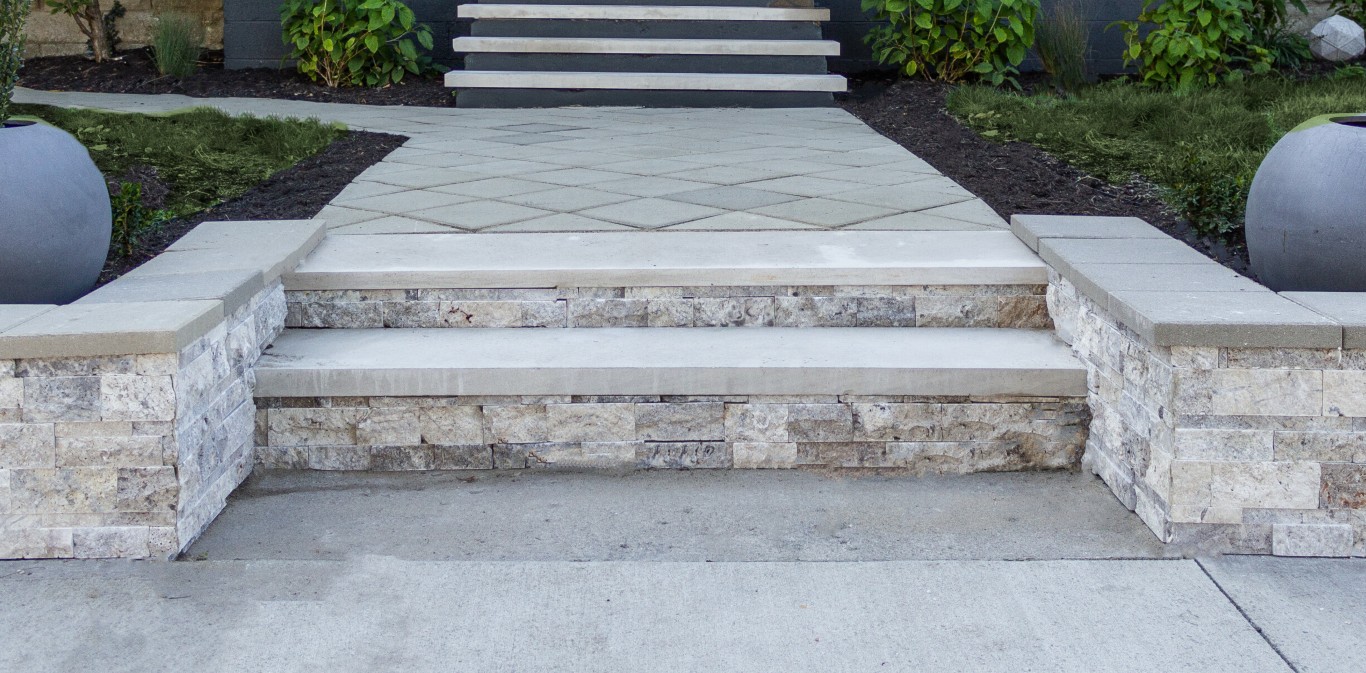
Decorative options enhance appearance. Stamped patterns create the look of stone or brick. Colored concrete coordinates with home exterior colors. Exposed aggregate adds natural stone appearance. Step edges can be rounded, bullnosed, or detailed with decorative profiles. These upgrades transform basic steps into architectural features. Key design considerations include:
- Consistent rise and tread dimensions for safety
- Proper width for intended traffic and use
- Adequate landings at doors and long flights
- Code-compliant railings securely anchored
- Slip-resistant surface texture
- Drainage to prevent water accumulation on treads
Our experience building steps throughout New Albany ensures your stairs meet all codes while fitting your needs. We help balance safety requirements with aesthetic goals to create steps that work well and look great.
How We Build Concrete Steps and Stairs
Building concrete steps requires precision and expertise. The work involves careful measurements, strong formwork, and proper reinforcement. We follow methods that ensure your steps remain safe and level for decades.
Planning and Layout
We start by measuring the total elevation change from bottom to top. This measurement gets divided by the desired rise to determine number of steps needed. Adjustments ensure each step has identical rise within code limits. We verify the layout fits available space and connects properly to existing surfaces at top and bottom.
If replacing existing steps, we remove them completely. The area is excavated to proper depth for new foundation work. Soil gets compacted to prevent settling. Foundation requirements depend on step height and local frost depth. Taller stairs need deeper foundations. We excavate below frost line to prevent heaving that makes steps uneven.
Formwork and Reinforcement
Building forms for steps takes skill and precision. Each riser must be exactly the right height. Forms must be strong enough to contain concrete without bowing or shifting. We use sturdy lumber and secure bracing. The forms create the step profile including nosing details and surface slope for drainage.
Reinforcement with rebar adds strength and controls cracking. We place horizontal bars in each tread and vertical bars connecting steps together. The reinforcement turns individual steps into one solid structure. This monolithic construction prevents steps from settling independently and developing uneven surfaces. Proper reinforcement is essential for long-lasting steps.
Concrete Placement and Finishing
Concrete for steps needs proper consistency for working in forms. Too wet and it sags. Too dry and it does not fill completely. We place concrete starting at the bottom and working up. Each step gets filled, consolidated to eliminate voids, and struck off level. Working methodically ensures complete filling and proper compaction.
Finishing creates the surface texture and appearance. We float each tread smooth first. Then we apply your chosen finish whether broom texture, exposed aggregate, or decorative stamping. Edges get tooled for rounded profiles that resist chipping. Proper finishing timing is critical because concrete continues hardening. Our experience ensures quality results.
Curing and Details
Curing allows concrete to gain full strength. We keep steps moist and protected for several days. Forms stay in place for at least two days before removal. You can walk on steps after three to four days but should avoid heavy loads for a week. Full strength develops over four weeks.
Final details complete the installation. We install railings if required by code or requested. Any connection to existing sidewalks or concrete surfaces gets sealed properly. Cleanup removes all debris and excess materials. Your new steps are ready to provide safe, reliable service for decades with minimal maintenance.